SphereChip: 3D Models on Planar MEAs
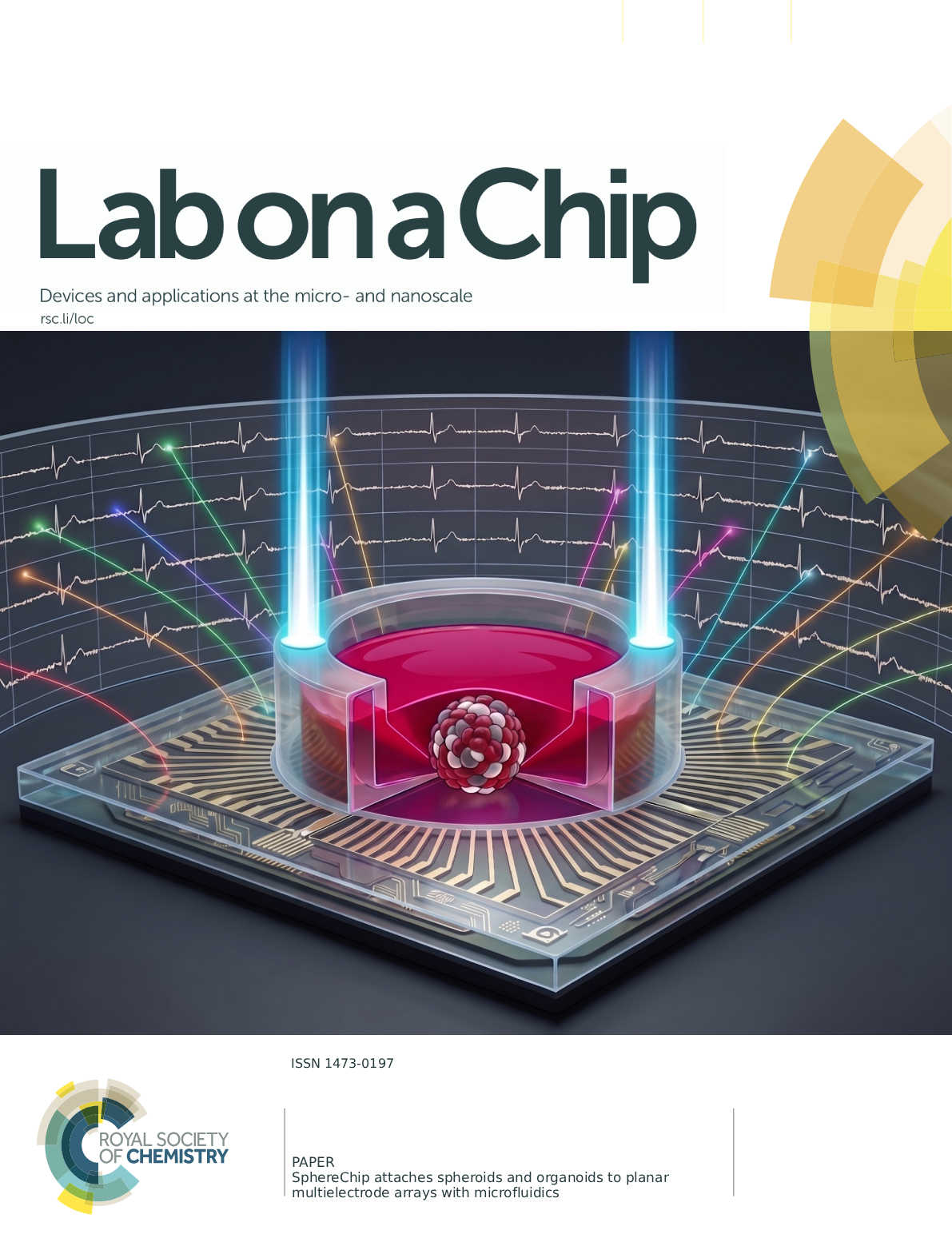
Human cardiac and neuronal stem-cell-derived spheroids and organoids are powerful models for drug discovery and safety studies, but their round, three-dimensional shape makes it difficult to establish stable electrode contacts with conventional planar multielectrode arrays (MEAs). Contractions of cardiac models and movement during solution exchange further disrupt recordings. These models form an important part of new approach methodologies (NAMs), which are endorsed by the FDA and EMA as a means of generating more human-relevant data while replacing, reducing and refining animal testing.
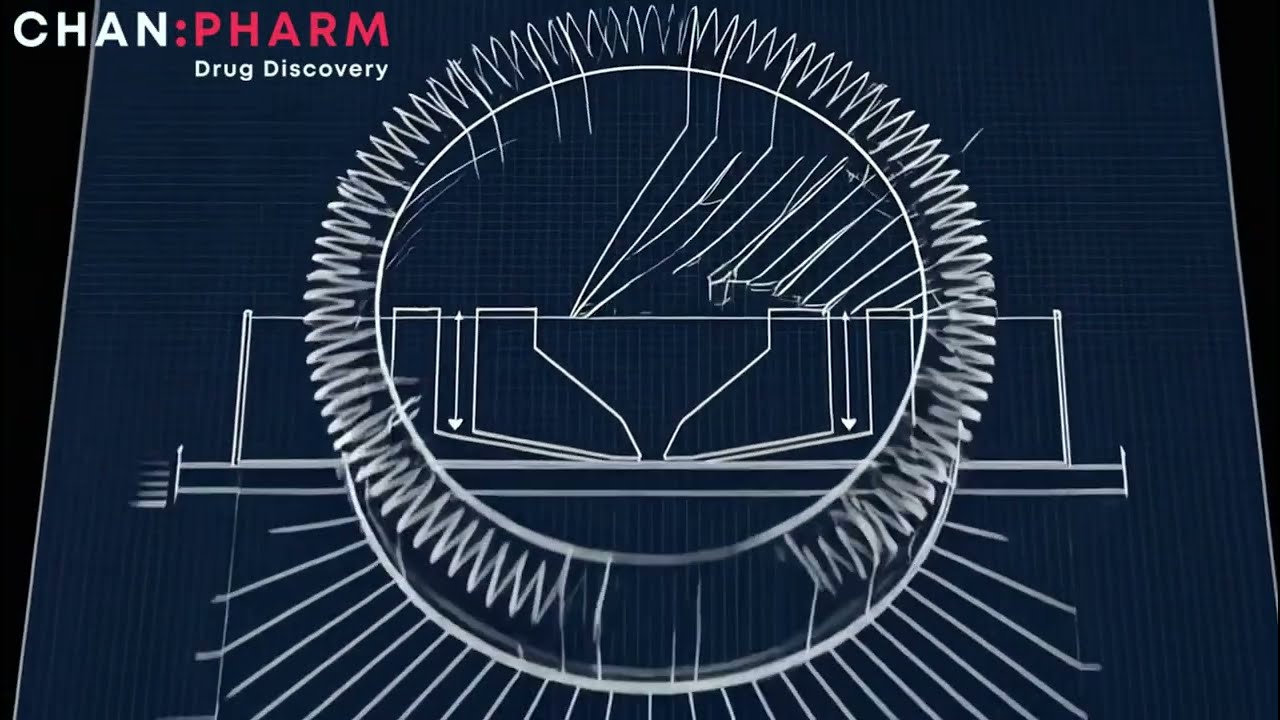
SphereChip, developed by ChanPharm, is a microfluidic device that solves this. Within seconds it seals free-floating spherical cell models — cardiospheres, cardioids and neurospheres — onto standard planar MEAs by gentle suction, reducing motion artefacts and enabling complete solution exchange. Its reusable quartz-glass design minimises drug absorption and allows simultaneous fluorescence imaging, opening the door to true organ-on-a-chip studies that combine field-potential measurements with optical readouts.
Method Video
Key Capabilities
Technical Capabilities
-
3D models on standard MEAs — stable attachment of cardiospheres and neurospheres (300–500 µm) and larger cardioids (800–900 µm), no specialised electrode fabrication required
-
Field potential + imaging — simultaneous field-potential recordings and fluorescence imaging on the same preparation, enabling action-potential readouts alongside extracellular signals
-
Reduced motion artefacts — gentle suction holds contracting cardiac models in place and enables complete solution exchange without losing electrode contact
-
Works across MEA formats — validated with Multi Channel Systems (60-electrode) and Axion Maestro Pro (6-well) MEAs
-
Reusable quartz glass — minimises drug absorption and enables high-quality optical access for imaging
Applications at ChanPharm
SphereChip extends ChanPharm's electrophysiology capabilities to physiologically relevant 3D models, bridging tissue-level complexity with quantitative functional readouts:
- Cardiac safety: concentration-dependent prolongation of action and field potentials in cardiospheres and cardioids — demonstrated with the hERG (Kv11.1) inhibitors E4031 and dofetilide. See our cardiac safety services.
- Neurotoxicity & CNS: spiking and bursting analysis in neurospheres — demonstrated with the Kv7.2/7.3 activator ML213. See our neurotoxicity services.
- 3D disease models: tissue-level electrophysiology on human iPSC-derived spheroids and organoids for translational drug discovery. See our stem cell studies.
Publication
The SphereChip method is published, peer-reviewed, in the Royal Society of Chemistry journal Lab on a Chip — and ChanPharm's design was selected for the issue's front cover.
SphereChip attaches spheroids and organoids to planar multielectrode arrays with microfluidicsLab on a Chip, 2026 · DOI: 10.1039/d6lc00522e · Read the publication →
Press Release
Read our press release on the SphereChip publication and its significance for 3D cell-based drug discovery and safety testing.
SphereChip Press ReleasePDF · Download →